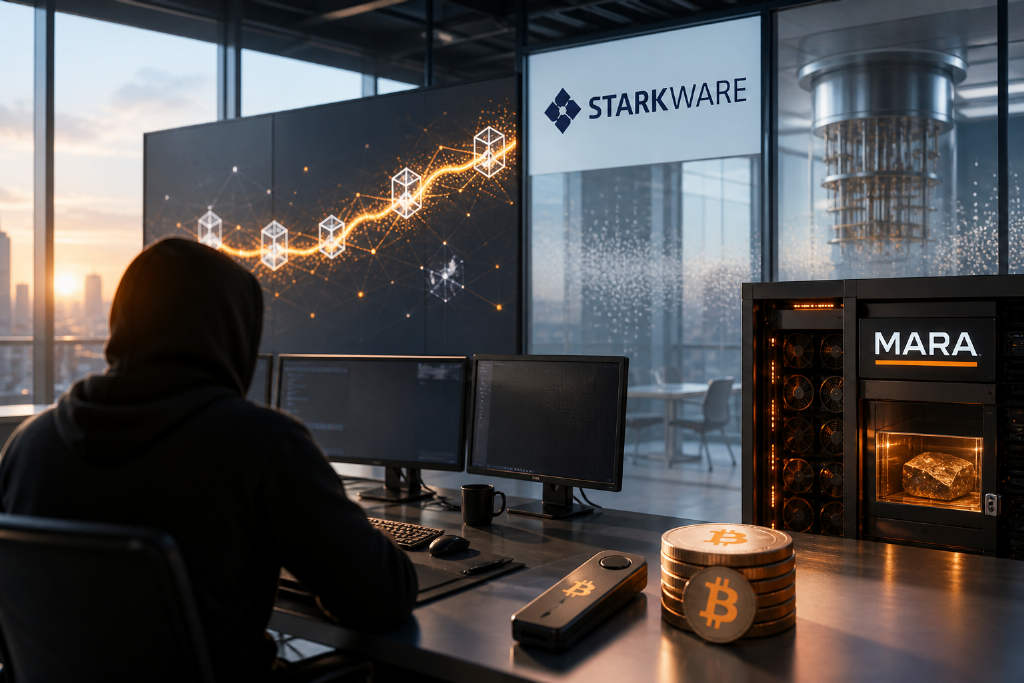
Bitcoin2026-09-26 15:01:05Quantum-safe Bitcoin transaction costs drop nearly 80% in a week as AI-led coders push optimizationThe estimated cost of building a quantum-resistant Bitcoin transaction fell from about $320 to roughly $67 in GPU compute within a week, according to StarkWare, which ran the Quantum-Safe Bitcoin Optimization Challenge with Yukon Research and Eigen Labs. The figure comes from the contest dashboard and reflects stated hardware assumptions rather than a market price. StarkWare said the first quantum-safe Bitcoin transaction was mined on mainnet last month. That initial construction took roughly 3,100 GPU-hours and cost around $320 to build. The biggest expense sits in a brute-force search performed on a user’s own hardware before the transaction reaches the blockchain, so the burden appears as GPU compute rather than a Bitcoin network fee. Contest participants improved performance sharply. One benchmark rose from 146 million verified candidates per second to more than 820 million per second on a standard RTX 4090, with 62 promoted improvements across two tracks. StarkWare said the top records were held by developers running AI models, led by Anthropic’s Opus 5 and Fable 5.1, with OpenAI’s GPT-6 Astra, Grok 4.6, and Kimi close behind. The company also cautioned that the work does not make Bitcoin quantum-safe by itself. These transactions remain nonstandard, must be sent directly to a miner, and only protect coins whose public key has not already been exposed. StarkWare said a soft fork remains the better long-term fix.350
Bitcoin2026-09-25 09:06:57CryptoQuant analyst says paper explores native privacy transactions on BitcoinCryptoQuant analyst Darkfost said a recent paper examines whether privacy transactions could be implemented directly on Bitcoin. According to his post, the idea would not require a soft fork and could be deployed on Bitcoin’s Layer 1, making privacy transactions a native feature of the network. Darkfost added that he is not a developer and does not have the technical background to assess the proposal in depth, but said he finds the concept compelling. He also said the approach could represent an important direction for Bitcoin’s evolution in line with Satoshi Nakamoto’s original vision, while potentially reducing the appeal of privacy-focused projects such as Zcash and Monero.330
Bitcoin2026-09-25 09:53:06Researchers publish Shielded Bitcoin design for Zcash-like privacy on BitcoinResearchers have released a specification called Shielded Bitcoin, outlining a way to add Zcash-style privacy protections to Bitcoin transactions. According to the design, the system is intended to hide the sender, recipient, and transaction amount. The proposal has not yet detailed how bitcoin would move into and out of the shielded system, with that mechanism set to be explained in a later paper. The report also says the design could enable private transfers on Bitcoin Layer1 without requiring a soft fork of the Bitcoin network. The item was reported by Decrypt and republished by Techub as a brief market analysis update. At this stage, the available information is limited to the high-level design goals and implementation claim described in the summary.270
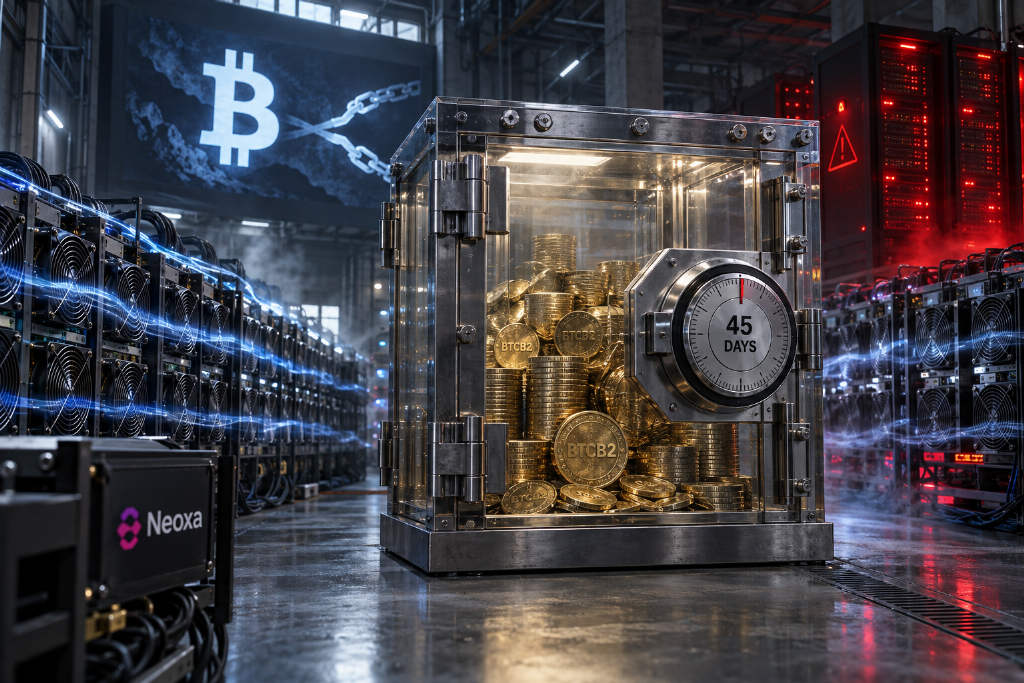
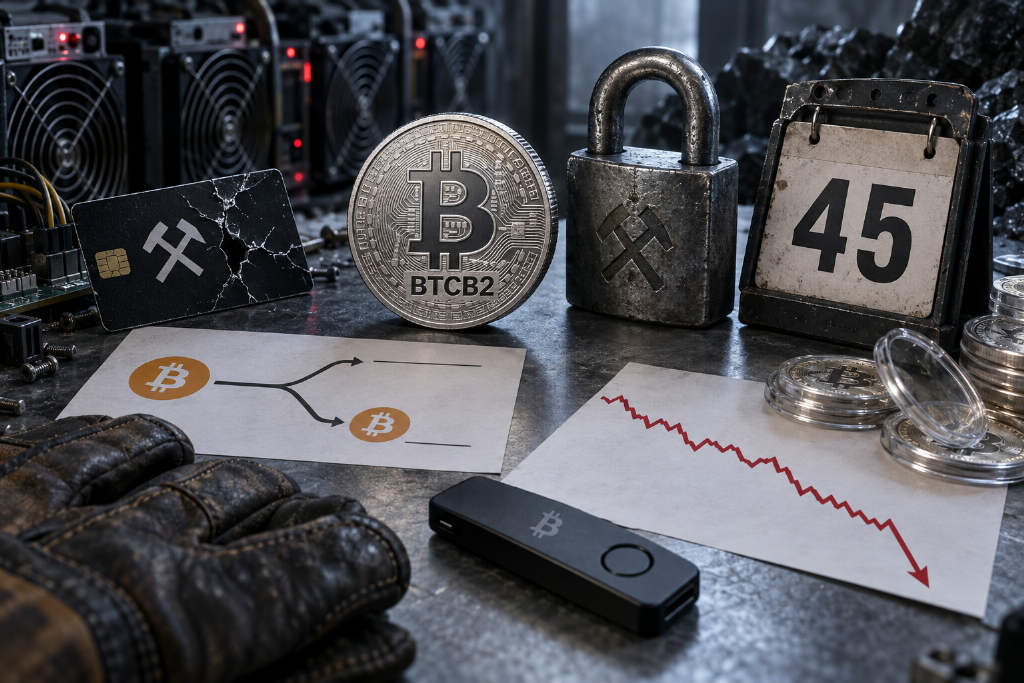
Bitcoin BLAKE2026-09-21 11:39:50Bitcoin BLAKE2b plans 45-day unlock delay for newly mined coinsBitcoin BLAKE2b developers are planning a change that would delay miners from unlocking newly mined coins for 45 days, according to Bitcoin.com. The update is scheduled to take effect at block height 973440. The chain forked from Bitcoin on Aug. 8, and its native token, BTCB2, has also been labeled on some trading platforms as Bitcoin BLAKE2b, Bitcoin BIP-110, or XBT. Developer Luke Dashjr said some BLAKE2b mining pools are "attacking" the network. After the fork, the chain kept Bitcoin's difficulty setting and produced only about eight blocks in its first 22 days before resuming normal operation through the activation of BLAKE2b hashing and a difficulty adjustment. BTCB2 is down 84% from its September high of $1,799 and has traded around $270 to $315 in recent hours. The chain is still not listed by most trading platforms, CoinGecko, or CoinMarketCap, while exchange Neoxa has said it will support the upcoming soft fork.360
Bitcoin BLAKE2026-09-21 11:39:38Bitcoin BLAKE2b plans 45-day lockup for newly mined BTCB2 as token drops 84% from September highBitcoin BLAKE2b developers are preparing a change that would stop miners from using newly mined BTCB2 immediately, setting a 45-day waiting period instead. The proposal is slated to take effect at block height 973440. The chain forked from Bitcoin on Aug. 8, and its native token appears on some trading platforms under the names Bitcoin BLAKE2b, Bitcoin BIP-110, or XBT. BTCB2 has fallen 84% from its September peak of $1,799, with trading in recent hours around $270 to $315. Developer Luke Dashjr said some BLAKE2b mining pools are "attacking" the network. After the fork, the chain kept Bitcoin's difficulty settings and produced only about eight blocks in its first 22 days. It later resumed normal operation after enabling BLAKE2b hashing and adjusting difficulty. The asset is still not listed by most trading platforms, CoinGecko, or CoinMarketCap. Exchange platform Neoxa has said it will support the upcoming soft fork, according to Bitcoin.com News.370
Starkware2026-08-29 11:32:05Starkware Completes Quantum-Resistant Bitcoin Transaction on Mainnet Without Soft ForkStarkware, a blockchain technology company, has reported that a transaction using the quantum-resistant Bitcoin (QSB) scheme proposed by researcher Avihu Levy was mined on the Bitcoin mainnet on August 26. The entire process was conducted without a soft fork, a hard fork, or any change to consensus rules. According to the disclosure, the transaction consumed 10,000 satoshis and was processed through the Slipstream service of MARA Foundation. Because the transaction's format is non-standard, it is normally unable to propagate within Bitcoin's public mempool. The test involved several hours of GPU computation, with costs estimated at around $150 to $200. QSB utilizes hash-based quantum-resistant spending conditions and also applies signature trial mining in order to lower the risk of quantum attacks. Even so, the scheme still requires users to actively migrate their funds, and it cannot provide protection for assets whose public keys have already been exposed. Starkware CEO Eli Ben-Sasson continues to support the introduction of a protocol-level solution through a soft fork. The details were covered by Bitcoin.com News.910
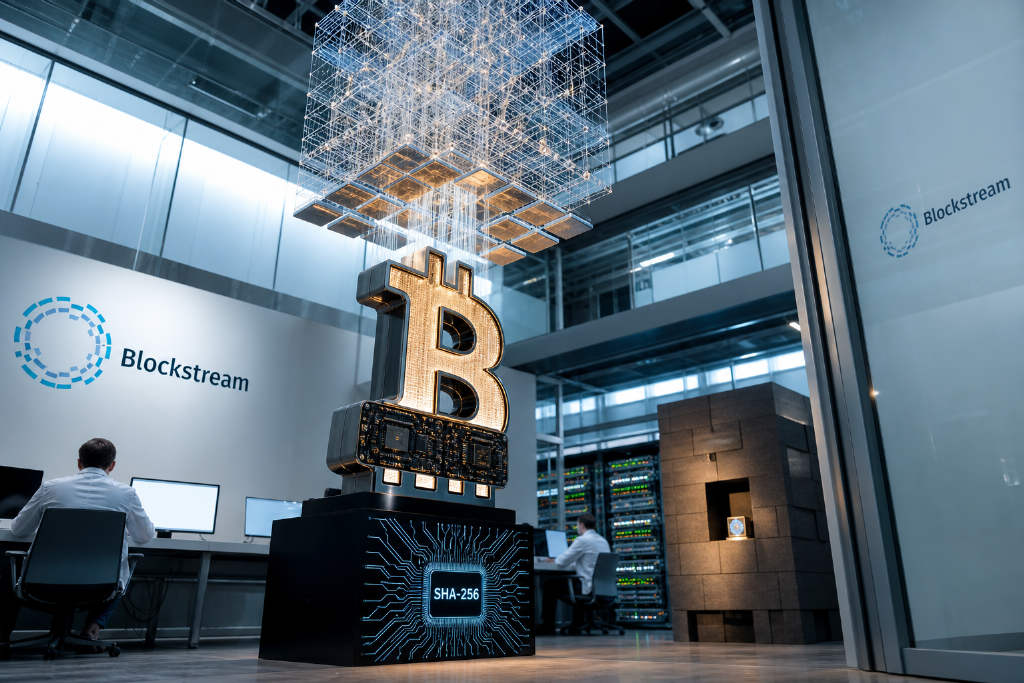
Blockstream2026-08-28 10:31:35Blockstream researchers publish SHRINCS draft, a post-quantum Bitcoin signature aimed at limiting block-space costsBlockstream researchers on Thursday released a draft specification for SHRINCS, a post-quantum signature scheme built specifically for Bitcoin. The proposal is designed to hold up against quantum computers without causing the steep transaction-capacity drop that has weighed on many post-quantum migration plans. Built on SHA-256, which already sits inside Bitcoin’s consensus rules and mining system, SHRINCS combines a compact stateful signing path with a stateless fallback in case a wallet loses track of signing state. The draft says the public key is 48 bytes, the smallest stateful signature is 548 bytes and grows by about 16 bytes each time a key is reused, while the stateless fallback is 5,776 bytes. Blockstream previously estimated Bitcoin could process about 6.5 transactions per second if all transactions used Schnorr signatures, versus roughly 0.36 under NIST-standardized SLH-DSA. SHRINCS, it said, gets that figure back to close to three. The specification also warns about wallet state management and compatibility risks tied to hypertree pruning. A formal security proof is still pending, and the reference software has not been audited or prepared for production use. Bringing SHRINCS to Bitcoin would require a soft fork and broad network support.900
Bitcoin2026-08-13 01:59:28Bitcoin soft fork proposal BIP-54 faces a tougher path as F2Pool co-founder withholds early supportBitcoin soft fork proposal BIP-54, formally titled "Consensus Cleanup," is meant to make four limited changes to Bitcoin’s core rules. The proposal is framed by supporters as preventive maintenance: a way to fix old bugs and unusual edge cases rather than introduce new functionality to the network. That distinction sits at the center of the current debate. On Aug. 13, BlockBeats reported that F2Pool co-founder Wang Chun does not support the proposal. He said that if BIP-54 secures the required majority through the standard BIP-9 activation process, F2Pool will update its mining nodes, but the pool will not signal support in advance. His objections focus on process and priority. In his view, packaging four changes together is similar to bundling unrelated measures into a single bill, while some of the risks being addressed are too remote to justify the coordination, software upgrades, and community attention required for a soft fork. Supporters argue the opposite. They say every consensus change carries a high social cost, so combining several defensive fixes into one effort can reduce the number of difficult, network-wide activations. They also argue that Bitcoin’s rising value gives attackers more incentive to probe weaknesses that once looked merely theoretical.1590